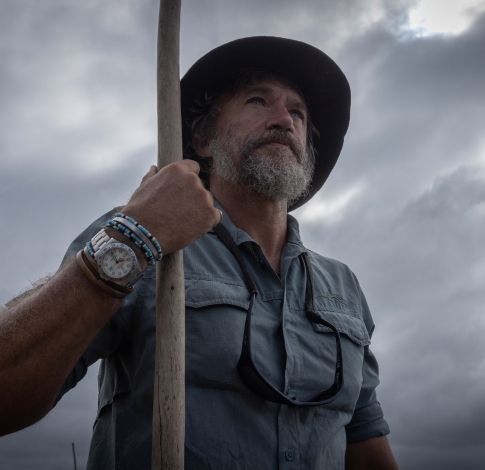














The Great Spine of Africa series of expeditions, led and founded by explorer Steve Boyes and supported by the Rolex Perpetual Planet Initiative, have proven that the source of the Zambezi River lies in the Angolan Highlands. Over the years, Boyes and his team have travelled more than 30,000 kilometres across river systems, many of which had never been scientifically documented before.
Following years of intensive research measuring the heartbeat of these waters, South African conservationist Boyes journeyed to the 2025 Ramsar Convention in Zimbabwe. There, he presented his findings on the Lisima Lya Mwono landscape in the Angolan Highlands water tower, aiming to have the area recognized as a wetland of international importance. With 172 national governments participating, the Ramsar Convention is a crucial global platform for the protection of wetlands. Achieving Ramsar Site recognition would ensure protection under national and international conservation frameworks, emphasizing sustainable use and land management.
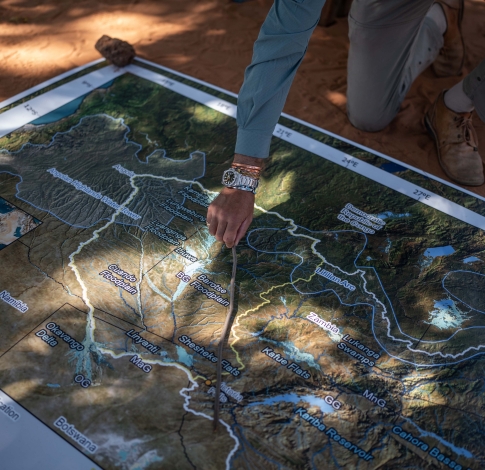
Next to the roaring white waters of the mighty Victoria Falls, Boyes distilled a decade of work into a 15-minute address to global changemakers. His team’s world-first research confirms that the true source of the Zambezi is in Angola. This pioneering assessment, combining expedition data with high-resolution satellite imagery, was published in a peer-reviewed scientific journal in September.
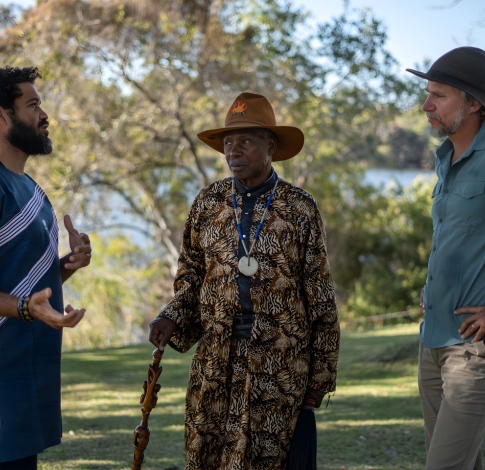
With strong support from influential collaborators – including Musonda Mumba, Secretary General of the Ramsar Convention, and Nyambe Nyambe, Executive Director of the Kavango Zambezi Transfrontier Conservation Area (KAZA TFCA) – the team is optimistic that Lisima Lya Mwono could be officially designated a Ramsar Site within months. Prior to the convention, Boyes bolstered his case with invaluable local knowledge provided by kings and chiefs from communities along the Zambezi, who gathered for the first time in 60 years to review the findings. Their endorsement has been crucial to the project.
“This meant a huge amount to me. Rivers unite people across borders. These are river guardians. They’re proud of the water. It’s an agreement across five countries for us to work very closely with them on monitoring the ecosystems.”
– Steve Boyes
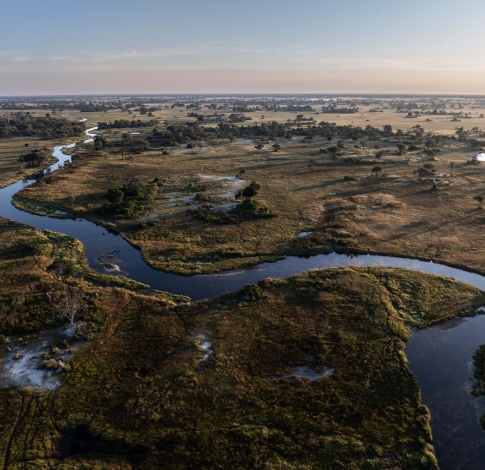
Boyes has spent 25 years studying wetlands, including extensive work in Botswana’s Okavango Delta. But in the eastern highlands of Angola, he found something entirely new.
“The lisima lya mwono (source of life) landscape is a system of source lakes and previously undocumented peatlands – the second-largest peatland discovery in tropical Africa. I found it astonishing that this was not globally recognized.”
– Steve Boyes
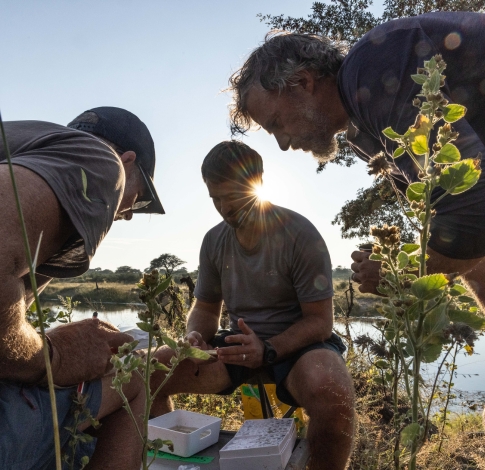
Driven by the mission to better understand and protect these precious waterways, and building on his success as leader of the National Geographic Okavango Wilderness Team, Boyes launched the Great Spine of Africa expeditions in 2022 under his new organization, The Wilderness Project. Supported by the Rolex Perpetual Planet Initiative, the goal is to establish the first scientific baselines of Africa’s major water towers and investigate their role as the sources of the Zambezi, Congo, Niger and Nile – rivers on which two-thirds of Africa’s economy depends.
The first Great Spine of Africa mission, the Lungwevungu Expedition, explored the remote Angolan Highlands, where local communities had long believed a tributary may be the Zambezi’s true source. Together with Kerllen Costa, National Geographic Okavango Wilderness Project Angola Country Director, Boyes travelled down the Lungwevungu River in dugout canoes, gathering scientific evidence to verify this traditional knowledge.
Now, as the team works to protect 1.2 million square kilometres of African watersheds, plateaus and river systems by 2035, their expeditions are expanding into other major waterways, including the Congo and Nile basins. The project has completed 20 expeditions this year alone, with plans to reach 25 next year through Rolex’s continued support.
“Only 14 percent of Africa is protected right now. Whenever I go to the source of a river, there are people living traditionally, protecting it already. They just need to be recognized as such.”
– Steve Boyes
Boyes spends nine months of the year in the field, paddling for up to eight hours a day. His challenges range from capsizing by hippos and elephant charges to spending six days in hospital with malaria.
Covering 15 million hectares, the area identified by Boyes and his team as the Zambezi River’s water source will become the third-largest Ramsar Site in Africa and the fifth-largest in the world. Their work highlights the critical importance of preserving the Angolan Highlands – not only for the Zambezi ecosystem and the 20 million people who depend on it, but also for other major African rivers, including the Congo and the Okavango, which collectively support hundreds of millions of lives.